
Tag: workflow automation

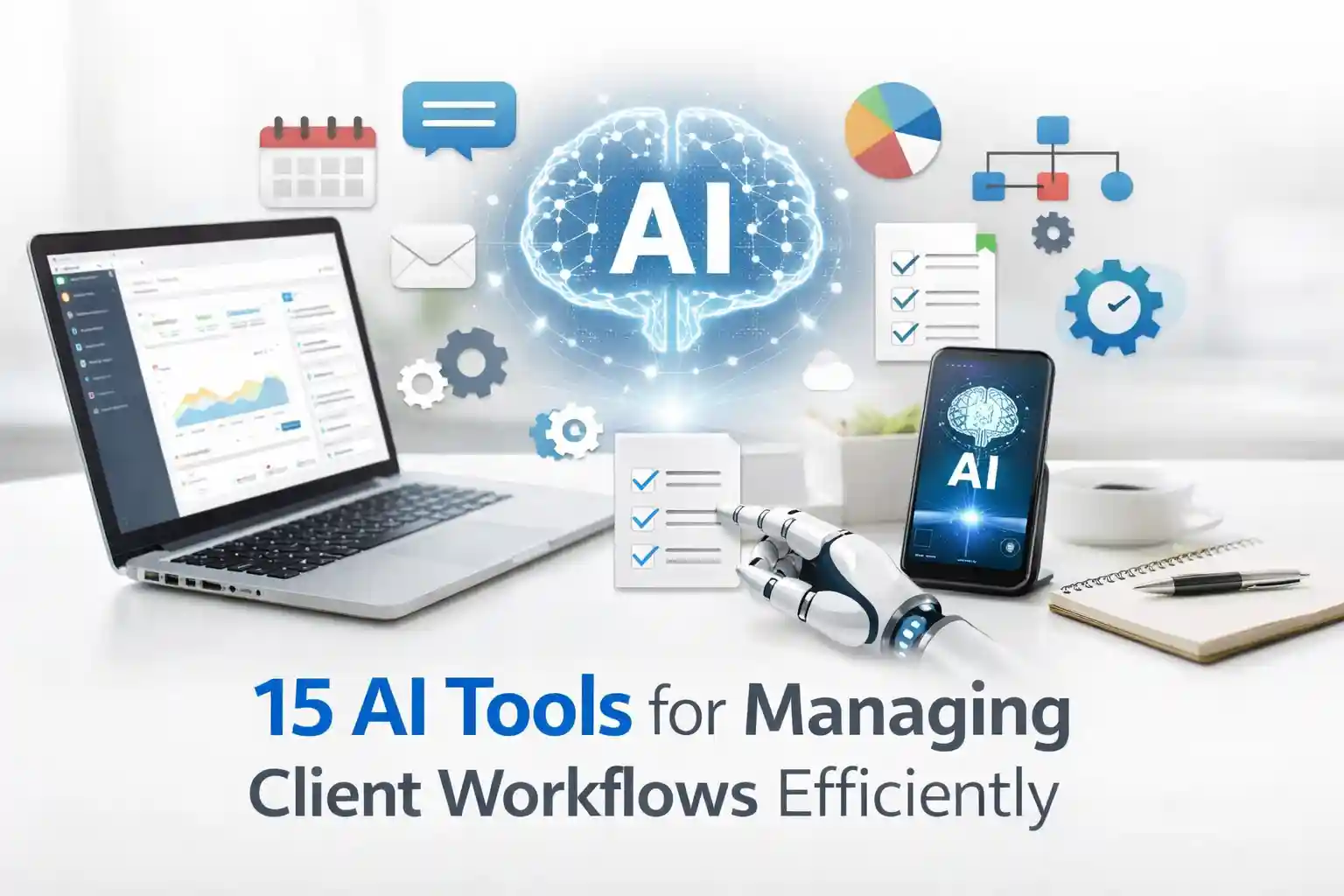
  • 15 AI Tools for Managing Client Workflows Efficiently

    15 AI Tools for Managing Client Workflows Efficiently

    Why AI‑Powered Workflow Management Is No Longer Optional

    Every consultant, agency, or freelancer who juggles dozens of client projects knows the pain of missed deadlines, scattered files, and endless back‑and‑forth emails. When a single misstep ripples through a workflow, revenue drops and reputation suffers.

    AI tools for managing client workflows streamline communication, task tracking, and project delivery in one place. They automate repetitive tasks, centralize client data, and provide real-time updates, helping teams reduce delays, improve collaboration, and deliver consistent results while maintaining clear visibility across every stage of the client lifecycle.

    The good news is that modern AI tools can automate routine tasks, keep every stakeholder on the same page, and surface insights before problems become crises. In this guide, you’ll discover 15 AI tools for managing client workflows efficiently, the exact steps to integrate them, and practical tips to avoid common pitfalls.

    How to Choose the Right AI Tool for Your Workflow

    Before diving into the list, spend a few minutes mapping your current process. Identify three bottlenecks—perhaps proposal drafting, task assignment, or progress reporting. Then match each bottleneck with a tool that excels in that area. The key is to start small, test with one client, and expand once you see measurable improvement.

    Key criteria for selection

    • Integration capability: Does it sync with your CRM, calendar, or file storage?
    • Ease of onboarding: Can your team learn it in under two days?
    • Data security: Look for GDPR‑compliant encryption, especially for client‑sensitive files.
    • Pricing transparency: Avoid hidden per‑user fees that explode as you scale.

    1. Jasper (formerly Jasper AI) – Smart Content Drafting

    Jasper (formerly Jarvis) – AI Content Generator

    Jasper uses large language models to generate proposals, briefs, and follow‑up emails in seconds. By feeding it a brief outline, you receive a polished draft that you can tweak before sending.

    How to implement

    1. Create a custom template for your standard proposal sections.
    2. Connect Jasper to your Google Drive folder for automatic saving.
    3. Set a 5‑minute review window—AI helps, but a human eye catches nuance.

    Prevention tip

    Always verify generated figures against your actual pricing sheet; AI can hallucinate numbers.

    2. ClickUp – AI‑Enhanced Project Hub

    ClickUp – AI‑Enhanced Project Hub

    ClickUp’s AI assistant can suggest task priorities, auto‑assign owners based on past performance, and generate status reports with a single command.

    Implementation steps

    • Import existing tasks via CSV to avoid duplicate work.
    • Enable the “Smart Suggestions” toggle in the workspace settings.
    • Schedule a weekly 10‑minute sync where the AI summarizes overdue items.

    Common mistakes to avoid

    Don’t let the AI auto‑assign without a final human check; mis‑assigned tasks can cause client frustration.

    3. Notion AI – Unified Knowledge Base

    Notion AI – All‑In‑One Knowledge Base

    Notion AI turns scattered meeting notes, contracts, and design specs into searchable, linked pages. Its summarization feature condenses a 20‑page contract into a bullet‑point brief for quick client review.

    Getting started

    1. Set up a “Client Workspace” with sub‑pages for each project.
    2. Use the “Summarize” command after each meeting note upload.
    3. Tag each page with the client name and status for instant filtering.

    Safety reminder

    Enable two‑factor authentication and restrict external sharing to protect confidential client data.

    4. Loom – AI‑Powered Video Communication

    Loom – AI‑Powered Video Communication

    Loom’s AI transcription adds searchable captions to every screen‑recorded walkthrough you send to clients. This cuts down on clarification emails by up to 40%.

    Practical workflow

    • Record a brief demo of the latest design iteration.
    • Let Loom auto‑generate captions, then edit for terminology.
    • Paste the video link into your ClickUp task with a one‑sentence summary.

    Tip to stay efficient

    Keep videos under three minutes; longer recordings reduce viewer retention and increase editing time.

    5. Calendly AI – Intelligent Scheduling

    Calendly – Smart Appointment Scheduling

    Calendly now offers AI that predicts optimal meeting slots based on past attendance patterns, time‑zone preferences, and even client workload.

    Step‑by‑step integration

    1. Link Calendly to your Google Calendar and Outlook.
    2. Enable “Smart Availability” in the settings.
    3. Share your personalized booking link in every proposal footer.

    Preventive measure

    Regularly audit the AI’s suggestions; occasional outliers can happen during holidays.

    6. Zapier + OpenAI – Custom Automation Bridges

    Zapier – No‑Code Workflow Automation

    Zapier’s new OpenAI integration lets you build bespoke bots that, for example, turn incoming client emails into task cards automatically.

    Example Zap

    • Trigger: New email in Gmail with label “Client Request”.
    • Action 1: Use OpenAI to extract key deliverables.
    • Action 2: Create a ClickUp task with those deliverables as checklist items.

    Watch out for

    Rate limits: if you process dozens of emails daily, consider a paid Zapier plan to avoid throttling.

    7. Grammarly Business – Real‑Time Writing Coach

    Grammarly Business – AI Writing Assistant

    Beyond grammar, Grammarly Business now offers tone detection and brand‑voice consistency checks, essential when communicating with high‑value clients.

    Implementation tip

    Set up a custom style guide in Grammarly that reflects your agency’s terminology. The AI will flag deviations instantly.

    8. HubSpot AI – CRM with Predictive Insights

    HubSpot AI

    HubSpot’s AI predicts which client leads are most likely to convert and suggests next‑step actions for existing accounts, helping you prioritize outreach.

    How to leverage

    1. Enable the “Predictive Lead Scoring” module.
    2. Review the AI‑generated activity list each morning.
    3. Assign high‑score leads to senior account managers for personal follow‑up.

    Potential pitfall

    Relying solely on scores can overlook niche opportunities; blend AI data with your market intuition.

    9. Miro AI – Visual Collaboration

    Miro AI – Visual Collaboration

    Miro’s AI can auto‑populate mind maps from meeting transcripts and suggest design layouts for client presentations.

    Practical use

    • Upload a recorded client call.
    • Click “Generate Board” and let AI create a flowchart of discussed milestones.
    • Share the board link for client feedback, reducing email back‑and‑forth.

    Tip

    Keep board titles concise; overly long titles confuse the AI’s auto‑tagging.

    10. Asana + AI – Task Automation

    Asana + AI

    Asana’s new AI assistant drafts project briefs, suggests deadlines based on historical velocity, and auto‑updates status fields.

    Quick start

    1. Enable “AI Assistant” in the workspace settings.
    2. Run “Generate Project Plan” from a client brief.
    3. Review and adjust dates before assigning owners.

    Safety note

    Validate AI‑suggested timelines against contractual commitments to avoid over‑promising.

    11. Synthesia – AI Video Creation for Updates

    Synthesia – AI Video Creation for Updates

    Synthesia lets you create personalized video updates with a virtual presenter, eliminating the need to record yourself each week.

    Workflow

    • Write a short script summarizing weekly progress.
    • Select a presenter who matches your brand tone.
    • Export and embed the video in your client portal.

    Preventive tip

    Keep scripts under 90 seconds; longer videos reduce viewer completion rates.

    12. Airtable + AI – Dynamic Databases

    Airtable + AI

    Airtable’s AI formulas can auto‑categorize incoming client requests, calculate project budgets on the fly, and flag scope creep.

    Example formula

    Use the AI field to parse a request email: AI('Extract budget, timeline, deliverables from {Email Body}').

    Watch out for

    Complex formulas can become hard to maintain; document each AI field in a separate “Meta” table.

    13. Monday.com – AI‑Driven Workload Balancing

    Monday.com

    Monday.com’s Workload View uses AI to distribute tasks evenly across your team, preventing burnout and ensuring client deadlines are met.

    Implementation steps

    • Enable the “Workload” column in your main board.
    • Set capacity limits per team member.
    • Let the AI suggest reassignments when a member exceeds capacity.

    Key precaution

    Regularly review suggested reassignments; AI may overlook skill‑specific nuances.

    14. Freshdesk AI – Customer Support Automation

    Freshdesk AI

    Freshdesk’s AI can triage incoming client tickets, suggest knowledge‑base articles, and even draft first‑response replies.

    Setup guide

    1. Upload your most common client FAQs.
    2. Enable “AI Suggested Reply” for all new tickets.
    3. Train the model with a few dozen real tickets to improve accuracy.

    Tip

    Periodically review AI‑generated replies to keep the tone aligned with your brand voice.

    15. Trello + Butler AI – Automated Card Management

    Trello + Butler Automation – Visual Project Management

    Butler AI in Trello can move cards based on due dates, add checklists from email content, and send reminder notifications.

    Simple rule example

    When a card is moved to “In Review”, automatically assign the senior designer and set a due date 2 days later.

    Potential issue

    Over‑automation can clutter boards; start with one or two rules and expand gradually.

    Real Questions People Ask About AI Workflow Tools

    1. Can AI replace a project manager?

    No. AI excels at data‑driven tasks—scheduling, reporting, and pattern detection. Human judgment remains essential for relationship management, strategic decisions, and handling ambiguous client requests.

    2. Is client data safe when using AI platforms?

    Reputable tools comply with GDPR, CCPA, and ISO‑27001 standards. Always enable encryption at rest, use role‑based access, and review each vendor’s privacy policy before integration.

    3. How much time can I realistically save?

    Teams that adopt at least three of the tools above report a 20‑30% reduction in manual admin time within the first quarter. Savings grow as you fine‑tune automations.

    4. What if the AI makes a mistake?

    Treat AI output as a draft, not a final product. Implement a review checkpoint—usually 5‑10 minutes—before anything reaches the client.

    5. Do I need a technical team to set these up?

    Most tools offer no‑code integrations and guided onboarding. A basic understanding of workflows is enough; you can involve a developer for complex multi‑tool automations.

    Putting It All Together: A Sample End‑to‑End Workflow

    Imagine you just landed a new client for a website redesign. Here’s how the 15 tools can work in concert:

    1. Jasper drafts the initial proposal based on a brief you upload.
    2. The proposal is saved in Notion AI where all project docs live.
    3. Client signs the contract; the signed PDF is auto‑uploaded to Airtable, which extracts budget and timeline.
    4. ClickUp creates a project board, and the AI suggests task priorities.
    5. Weekly progress videos are generated in Synthesia and embedded in the client portal.
    6. Any client questions land in Freshdesk AI, which suggests answers from your knowledge base.
    7. When a design mockup is ready, you record a quick walkthrough with Loom, letting AI add captions.
    8. All meeting notes from that call are summarized in Notion AI and linked back to the ClickUp task.
    9. Finally, Calendly AI schedules the next review meeting, and Monday.com ensures no team member is overloaded.

    The result is a seamless, transparent experience for the client and a 25% reduction in manual coordination for you.

    Preventive Tips to Keep Your AI Workflow Healthy

    • Regularly audit permissions: Remove access for former employees and third‑party apps you no longer use.
    • Version‑control critical prompts: Store Jasper and OpenAI prompt templates in a shared folder to avoid drift.
    • Monitor AI confidence scores: Many platforms display a confidence level; treat low‑confidence outputs as high‑risk.
    • Back up data weekly: Export key tables from Airtable and Notion to CSV for disaster recovery.
    • Stay updated on policy changes: AI providers often revise data‑handling terms; a quarterly review keeps you compliant.

    My Experience Integrating AI Into Client Workflows

    When I first adopted ClickUp’s AI assistant for a 12‑person digital agency, we reduced meeting prep time from two hours to fifteen minutes. The key was limiting AI suggestions to “draft only” and assigning a senior manager to approve each change. Over six months, the agency saw a 15% increase in billable hours because less time was spent on administrative overhead.

    Each tool has its strengths; Jasper shines at copy, while Notion AI is unbeatable for knowledge management. Choosing a mix that aligns with your team’s habits yields the best ROI.

    Whether you’re a solo freelancer or a growing agency, the right combination of AI tools can transform chaotic client interactions into a predictable, efficient engine. Start with one or two tools, measure the impact, and expand deliberately. The future of client work is already here; make it work for you.

    Disclaimer: Some links may be affiliate links. Availability and signup requirements may vary.