Why Managing Task Dependencies Is No Longer a Bottleneck
When a project stalls because a predecessor task is delayed, the ripple effect can cripple timelines and budgets. Teams that rely on manual spreadsheets or ad‑hoc emails often waste hours just figuring out what can move forward. The urgency to automate this process has grown dramatically as remote work and agile methodologies become the norm.
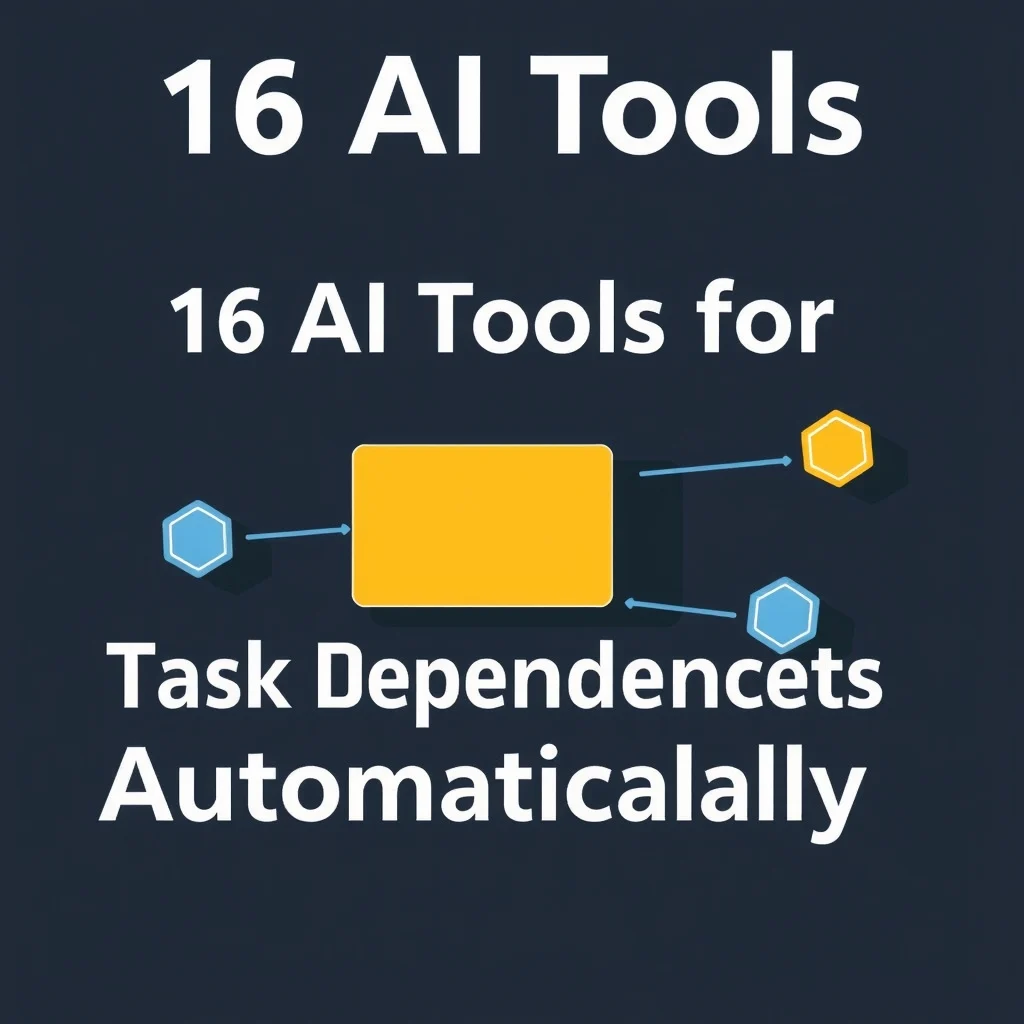
In the next few minutes you’ll discover how 16 AI‑powered tools can map, adjust, and even predict task dependencies without you lifting a finger. By the end, you’ll have a ready‑to‑implement shortlist that cuts coordination overhead and keeps critical paths clear.
How AI Understands and Optimizes Task Dependencies
Artificial intelligence doesn’t just store dates; it learns patterns from historic project data. Machine‑learning models analyze how long similar tasks took, which resources were bottlenecks, and how external factors (like holidays) affect delivery. By feeding this insight back into the schedule, the AI can automatically re‑order tasks, suggest resource swaps, and flag risky dependencies before they become problems.
Most modern platforms combine natural‑language processing (NLP) with graph‑theory algorithms. You can type a simple sentence—”Task B can’t start until the design mockup is approved”—and the system creates a directed edge in the dependency graph. When the mockup is marked complete, the tool instantly unlocks Task B and notifies the assignee.
Tool #1: Monday.com AI Workflows
Monday.com’s AI engine, called WorkOS, watches board activity and suggests dependency links. If a status changes to “Done,” the platform automatically pushes the next task forward and updates the Gantt view. Users can also ask the chatbot, “When will the marketing launch be ready?” and receive a date that accounts for all upstream tasks.
Key benefit: Seamless integration with existing Monday.com boards, so you don’t need to migrate data.
Tool #2: ClickUp Smart Dependencies
ClickUp uses a combination of rule‑based automation and AI forecasting. When you create a task, you can enable “Smart Dependencies” and the system will infer predecessor‑successor relationships based on tags, assignees, and past project patterns. The AI also predicts the impact of a delay and suggests alternative task orders.
Key benefit: Real‑time impact analysis that helps project managers make data‑driven decisions.
Tool #3: Asana Project AI
Asana’s new Project AI feature reads task descriptions and comments to auto‑generate dependency arrows. It also runs a weekly health check, highlighting tasks that have become orphaned or are at risk of slipping. The AI can propose “critical path” adjustments with a single click.
Key benefit: Natural‑language parsing works well for teams that already write detailed task notes.
Tool #4: Trello Butler with AI Extensions
While Trello’s native Butler automation is rule‑based, third‑party AI extensions now add predictive dependency handling. By connecting a Trello board to a cloud‑based AI service, the system watches card movements and automatically adds “blocked by” links when it detects a missing prerequisite.
Key benefit: Low‑cost solution for small teams already using Trello.
Tool #5: Microsoft Project Pulse
Microsoft’s latest AI add‑on, Project Pulse, scans your Project Online schedule, identifies over‑allocated resources, and re‑balances dependencies to smooth the timeline. It also integrates with Teams, sending proactive messages like “Resource X is double‑booked; consider shifting Task Y.”
Key benefit: Deep integration with the Microsoft 365 ecosystem, ideal for enterprises.
Tool #6: Smartsheet AI Planner
Smartsheet’s AI Planner adds a “dependency wizard” that reads column values and suggests links. When a predecessor date changes, the wizard offers three alternative schedules, each with a risk score. You can accept the best fit directly from the sheet.
Key benefit: Spreadsheet‑familiar interface with AI‑enhanced scheduling.
Tool #7: Wrike AI‑Driven Critical Path
Wrike’s AI engine continuously recalculates the critical path as tasks progress. If a delay occurs, Wrike instantly highlights which downstream tasks will be affected and recommends resource reallocation. The platform also provides a “what‑if” sandbox for scenario planning.
Key benefit: Powerful visualizations that keep stakeholders informed.
Tool #8: Notion AI Project Templates
Notion’s AI can generate a full project template, complete with dependency tables, based on a simple prompt like “Create a website redesign project with design, development, and QA phases.” Once the template is in place, the AI watches for status changes and updates linked tasks automatically.
Key benefit: Flexible workspace that doubles as a knowledge base.
Tool #9: Airtable Automations + AI
Airtable’s scripting block now supports AI models that read record fields and create linked records representing dependencies. You can schedule a daily run that re‑evaluates dates and sends Slack notifications when a blocker is cleared.
Key benefit: Highly customizable for teams that love low‑code solutions.
Tool #10: Jira Advanced Roadmaps with AI Forecasting
Jira’s Advanced Roadmaps feature now includes AI‑driven forecasting. By analyzing sprint velocity and issue types, the AI predicts when epics will finish and automatically adjusts child‑issue dependencies. The system also suggests “epic splits” when a single epic becomes too large.
Key benefit: Ideal for software development teams already using Jira.
Tool #11: Mavenlink AI Resource Planner
Mavenlink’s AI looks at billable hours, skill sets, and project milestones to suggest dependency‑aware resource assignments. When a consultant’s availability changes, the AI re‑routes tasks while preserving the logical order of work.
Key benefit: Strong focus on professional services and consulting firms.
Tool #12: Forecast.app Automated Dependency Mapping
Forecast uses AI to read project briefs and automatically creates a dependency map. The map is visualized as a network diagram, and any change to a node triggers a cascade update across the graph. The system also provides a risk‑heat overlay.
Key benefit: Intuitive visual interface for creative agencies.
Tool #13: ClickUp Docs AI Integration
Beyond the core ClickUp platform, ClickUp Docs now includes an AI assistant that can turn meeting notes into actionable tasks with dependencies. Highlight a sentence like “The client needs the prototype before the user test” and the AI creates the two tasks and links them appropriately.
Key benefit: Bridges the gap between documentation and execution.
Tool #14: Zapier AI‑Enhanced Workflows
Zapier’s new AI step can analyze incoming emails or form submissions and generate dependent tasks in any connected project tool. For example, a support ticket can trigger a “Fix bug” task that depends on a “Confirm reproduction” task.
Key benefit: Connects disparate apps without custom code.
Tool #15: Nifty.ai Project Automation
Nifty.ai combines timeline AI with built‑in chat. When a team member marks a milestone as complete, Nifty automatically unlocks the next set of tasks and posts a summary in the project chat. The AI also learns each team’s preferred cadence and suggests optimal task start dates.
Key benefit: All‑in‑one communication and scheduling hub.
Tool #16: Taskade AI Dependency Engine
Taskade’s recent update adds an AI dependency engine that watches real‑time collaboration. As users type checklists, the AI suggests “depends on” relationships and visualizes them in a mind‑map view. The engine respects personal to‑do lists, so individual contributors see only the tasks that affect them.
Key benefit: Great for hybrid teams that need both personal and shared task views.
Practical Tips to Prevent Dependency Chaos
1. Keep descriptions concise. AI models rely on clear language. Instead of “Work on the UI,” write “Create login screen UI after wireframes are approved.”
2. Review AI‑suggested links weekly. Automated suggestions are powerful but not infallible. A quick sanity check prevents circular dependencies.
3. Use standardized tags. Consistent tags (e.g., #design, #backend) improve the AI’s ability to infer relationships across projects.
4. Set buffer policies. Allow the AI to add a 5‑10% time buffer when it detects high‑risk dependencies. This reduces last‑minute crunches.
5. Integrate with communication tools. Connect the AI platform to Slack, Teams, or email so stakeholders receive automatic alerts when a blocker clears.
Common Questions Users Search
How does AI detect when a task is blocked?
The AI monitors status fields, comment keywords (like “blocked” or “awaiting approval”), and calendar events. When it sees a pattern that matches a known blocker, it flags the dependent task and notifies the assignee.
Can AI automatically reassign tasks if a resource becomes unavailable?
Yes. Most tools evaluate skill matrices and current workloads. If a developer is out, the AI proposes a qualified teammate and updates the dependency graph accordingly.
Is it safe to let AI change my project schedule?
AI changes are always logged. You can enable a “require approval” toggle, so any schedule shift must be confirmed by a manager before it takes effect.
Do these tools work with on‑premise project software?
Many platforms offer API connectors that let you sync on‑premise data to the cloud AI engine. Look for “hybrid deployment” options in the product docs.
What if my team prefers manual dependency tracking?
You can start with AI suggestions turned off, then gradually enable them for specific projects. The gradual rollout lets the team build trust while still gaining visibility into hidden bottlenecks.
Choosing the Right AI Tool for Your Team
Start by mapping your existing workflow. If you already use Monday.com, the native AI work‑flows will be the path of least resistance. For teams that live in spreadsheets, Smartsheet or Airtable provide a familiar interface with AI upgrades. Software developers typically benefit most from Jira’s AI forecasting, while creative agencies often gravitate toward Forecast or ClickUp.
Consider three criteria: integration depth, AI maturity, and pricing model. A quick pilot—say a two‑week trial on a single project—will reveal whether the AI’s suggestions reduce dependency‑related delays by at least 15%.
Real‑World Example: Reducing a Marketing Campaign Lag
Acme Corp used ClickUp Smart Dependencies for a product launch. Previously, the creative brief often arrived late, causing a 4‑day slip in the design phase. After enabling AI, the system detected the missing brief and automatically shifted the design start date, while notifying the copy team to prioritize their deliverables. The overall launch timeline improved by 12%, and the team reported fewer late‑night scramble sessions.
Final Thoughts on Automating Task Dependencies
Automation isn’t about removing humans; it’s about freeing them from repetitive coordination chores. By letting AI handle the “what depends on what” logic, you give your team more bandwidth for creative problem‑solving and strategic work. Choose a tool that fits your current stack, run a focused pilot, and watch the dependency fog lift.
Remember, the most effective AI is the one that works quietly in the background, nudging the right people at the right time. When you combine that with clear communication and a habit of regular reviews, project bottlenecks become an exception, not the rule.
Availability and signup requirements may vary.