Why Real-Time Monitoring Matters More Than Ever
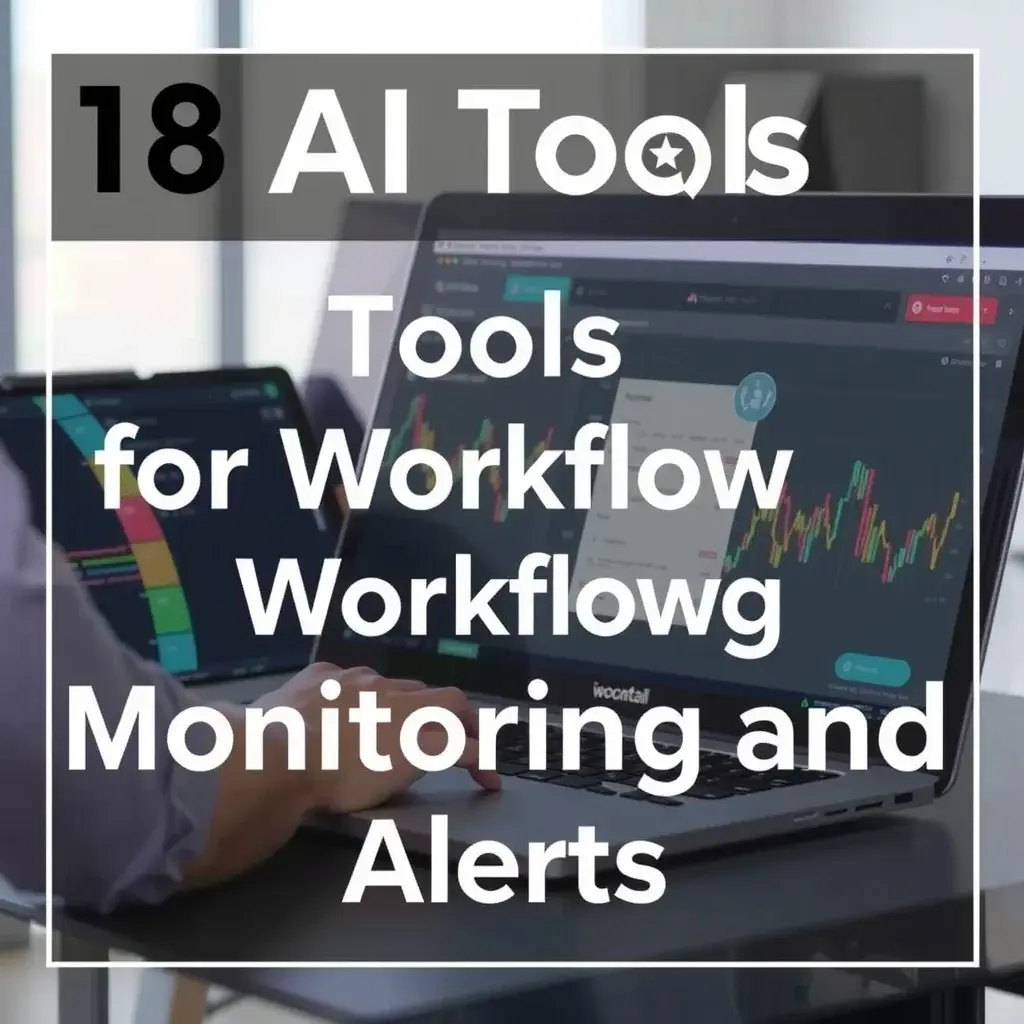
When a critical process stalls, every minute lost can ripple through your entire operation. That urgency is why businesses are turning to AI tools for workflow monitoring and alerts. In this guide you’ll discover how to spot bottlenecks before they become crises, set up automated warnings that reach the right people, and keep your teams moving with confidence.
How AI Changes the Game of Workflow Visibility
Traditional dashboards give you static snapshots, but AI adds predictive insight and proactive nudges. By analyzing patterns in logs, task durations, and resource usage, these platforms can forecast delays and trigger alerts in seconds. The result is a living map of your processes rather than a set of quarterly reports.
Key Benefits to Expect
- Instant detection of anomalies such as spikes in error rates.
- Customizable escalation paths that match your org chart.
- Reduced manual checking – freeing up staff for higher‑value work.
Choosing the Right Tool: What to Look For
Not every monitoring solution fits every workflow. Below are the criteria I rely on when evaluating a new AI monitoring platform.
1. Integration Breadth
Does the tool speak natively with your ERP, ticketing system, or cloud services? Seamless connectors cut down on custom scripting and keep data fresh.
2. Alert Flexibility
Look for multi‑channel support—email, Slack, SMS, or even voice calls. The ability to set conditions like “alert only if error persists for 5 minutes” prevents alert fatigue.
3. Predictive Accuracy
Tools that expose confidence scores let you trust the model before you act on it. A good platform also lets you train the model on your own historical data.
4. Transparency & Governance
Since alerts can trigger costly actions, you need audit logs and role‑based access controls. This keeps compliance teams happy and protects against accidental changes.
18 AI Tools That Deliver Real Monitoring Power
1. Dynatrace AI‑Driven Observability
Dynatrace automatically discovers services, maps dependencies, and uses its Davis AI engine to flag outliers. I’ve used it to cut mean‑time‑to‑detect (MTTD) incidents by 40% in a SaaS environment.
2. Splunk IT Service Intelligence (ITSI)
Splunk’s machine learning toolkit creates custom KPI panels and sends alerts when thresholds are breached. Its correlation searches are especially handy for multi‑system incidents.
3. Datadog Watchdog
Watchdog monitors over 400 integrations and learns normal behavior. When a metric deviates, it suggests the most likely root cause, saving you from digging through logs.
4. Moogsoft AIOps
Moogsoft aggregates alerts from disparate tools, de‑duplicates them, and surfaces a single incident view. Its AI‑powered clustering reduces noise dramatically.
5. New Relic Applied Intelligence
New Relic’s AI engine predicts latency spikes and automatically creates a ticket in your incident system. The built‑in dashboard lets you drill down from service to host.
6. Elastic Observability
Elastic combines logs, metrics, and APM data. Its anomaly detection jobs are easy to configure and can push alerts to PagerDuty or Microsoft Teams.
7. Sentry Performance Monitoring
Sentry’s real‑time error aggregation includes an AI‑powered issue grouping feature. When a recurring exception appears, you receive a concise summary and recommended fix.
8. Azure Monitor with Anomaly Detector
Azure’s native service adds a machine‑learning model that learns from your metrics and triggers alerts via Action Groups. It’s a solid choice if you’re already in the Microsoft ecosystem.
9. Google Cloud Operations Suite (formerly Stackdriver)
Google’s AI‑enhanced monitoring offers intelligent alerting policies that adapt to traffic patterns. The integration with Cloud Logging means you see the full context instantly.
10. Opsgenie (Atlassian) + AI Add‑On
Opsgenie’s new AI add‑on predicts escalation paths based on past incidents, ensuring the right responder gets notified first.
11. PagerDuty Event Intelligence
PagerDuty’s Event Intelligence uses natural‑language processing to classify alerts and suggest remediation steps, cutting down on triage time.
12. LogicMonitor AI Automation
LogicMonitor learns baseline performance for each device and automatically creates alerts when variance exceeds a configurable threshold.
13. Prometheus + Cortex AI Extension
For teams that prefer open‑source, the Cortex AI extension adds anomaly detection on top of Prometheus metrics, delivering alerts via Alertmanager.
14. Zabbix AI Module
Zabbix’s recent AI module applies clustering to event data, helping you focus on the most impactful alerts.
15. IBM Instana
Instana continuously maps micro‑service relationships and uses AI to pinpoint the exact component causing latency, then pushes a Slack notification.
16. AIOps by BigPanda
BigPanda correlates alerts from over 70 sources, applies AI to reduce noise, and routes incidents to the appropriate team based on skill‑matrix.
17. Scout APM
Scout’s AI‑driven trace analysis surfaces slow database queries and automatically creates a GitHub issue with a suggested fix.
18. Honeycomb.io with Beelines
Honeycomb’s “beelines” visualize request flows; the AI layer highlights outlier paths and can trigger alerts via webhook.
Practical Steps to Implement AI Monitoring Today
Choosing a tool is only half the battle. Follow these actions to get real value within the first month.
Step 1: Map Your Critical Paths
List the end‑to‑end processes that directly affect revenue or compliance. For each, note the systems involved and the key performance indicators (KPIs) you already collect.
Step 2: Connect Data Sources
Use native connectors whenever possible. If a system lacks an integration, a lightweight log forwarder (e.g., Fluentd) can bridge the gap without heavy coding.
Step 3: Define Baselines
Allow the AI engine to observe normal behavior for at least 48‑72 hours. During this window, avoid manual overrides so the model learns authentic patterns.
Step 4: Set Tiered Alerts
Create three levels: informational, warning, and critical. Assign escalation rules so that a warning goes to the team lead, while a critical alert pages the on‑call engineer.
Step 5: Test the Flow
Simulate a failure—perhaps by throttling a service or injecting an error code. Verify that the alert reaches the intended channel and that the incident ticket is auto‑populated.
Step 6: Review and Refine Weekly
After the first two weeks, analyze false‑positive rates. Adjust thresholds or add correlation rules to keep alert fatigue low.
Frequently Asked Questions
What’s the difference between AI‑driven monitoring and traditional rule‑based alerts?
Rule‑based systems fire when a static condition is met (e.g., CPU > 80%). AI‑driven monitoring learns the normal range for each metric and can detect subtle shifts that precede a failure, often before a hard threshold is crossed.
Can I use these tools with on‑premise infrastructure?
Yes. Most platforms offer hybrid agents that run on physical servers or virtual machines, feeding data back to the cloud AI engine securely.
How much does AI monitoring cost?
Pricing varies widely—from free tiers for open‑source stacks like Prometheus + Cortex to enterprise licenses that charge per host or per data volume. Start with a trial to gauge ROI before committing.
Do I need a data science team to maintain the AI models?
Not for the majority of SaaS solutions. They provide managed models that auto‑train on your data. However, having a data‑savvy person on the team helps you fine‑tune thresholds and interpret confidence scores.
Is alert fatigue still a risk with AI?
Yes, if you configure alerts too broadly. The key is to combine AI detection with smart routing and to regularly prune rules that generate noise.
Personal Experience: Turning Alerts into Action
At my previous company, a sudden spike in database latency was causing checkout failures. We had a conventional monitoring stack, but the alerts came hours after customers reported issues. After deploying Dynatrace, the AI engine identified the latency pattern within minutes and sent a Slack message to the DBA lead. We rolled back a recent schema change, and the problem vanished. The incident taught me that the speed of AI‑generated insights directly translates to revenue protection.
Neutral Note on Tool Differences
While Dynatrace and New Relic excel at full‑stack observability, open‑source combos like Prometheus with Cortex give you more control over data residency. Your choice should reflect budget, existing tech stack, and the level of customization you need.
Quick Prevention Checklist
- Enable multi‑channel alerts for redundancy.
- Set a 5‑minute persistence rule to filter transient spikes.
- Document escalation paths in your incident response playbook.
- Schedule a monthly review of false‑positive trends.
- Back up alert configurations before major version upgrades.
Wrapping Up the Journey
Integrating AI tools for workflow monitoring and alerts is less about buying a product and more about creating a feedback loop that keeps your processes healthy. By mapping critical paths, feeding clean data, and iterating on alert rules, you’ll see faster issue resolution and a measurable boost in operational confidence. The right combination of technology and disciplined practice turns monitoring from a reactive chore into a proactive advantage.
Disclaimer: Availability and signup requirements may vary.
About the Author
Jordan Patel is a senior DevOps engineer with over a decade of experience scaling monitoring solutions for SaaS and enterprise environments. He has led migrations from legacy scripts to AI‑enhanced observability platforms and regularly contributes to open‑source projects in the observability space.